- Blog
- >
- Fall Prep Continues, and Now It’s Your Team’s Turn
Last updated: August 5, 2026
Fall Prep Continues, and Now It’s Your Team’s Turn
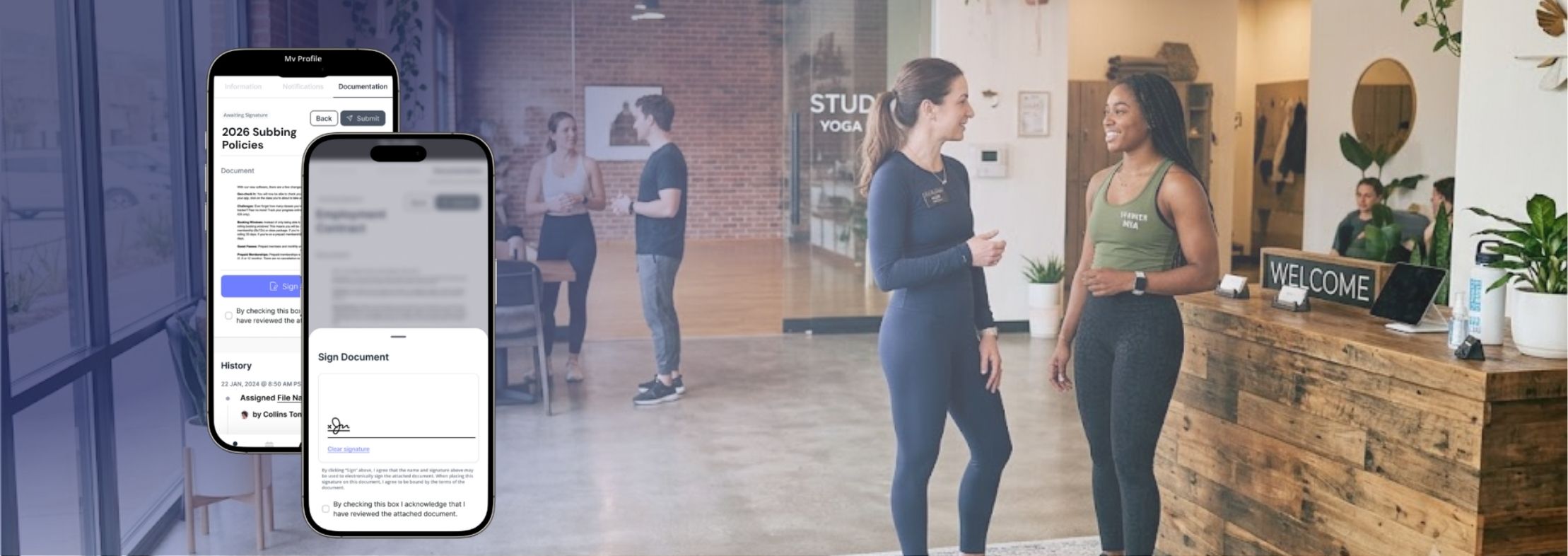
You've heard what your clients want. Now comes the other half: what your team can actually give, and what will keep them engaged.
We just spent two weeks listening to your clients: what they want this fall, when they want to come back, and what would actually get them booking again. That’s step one of fall prep, and if you completed it, you’re sitting on a real read of demand instead of a hunch. (Missed part 1 of fall prep? Start here.)
Quick refresher on the overall fall prep sequence: (i) understand what your clients want, (ii) find out your team’s availability and preferences, (iii) combine the two into a schedule that fits, then (iv) run a segmented client outreach plan to fill it.
With step one complete, we flip to the other side of the listening exercise: your team. Great fall schedules are collaborative, built with both your clients and your team in mind. So now it’s time to find out what your team can logistically give, what they’re itching to learn, and what would keep them engaged.
Reminder: gathering input doesn’t mean you give everyone exactly what they want. But knowing what keeps your people engaged is a data point worth having in the mix.
Here’s the fall mindset shift for this step. Back in the spring, gathering team availability for summer was a defensive move. You were bracing for callouts, vacations, and coverage gaps. Fall is the opposite. Your team is hopefully hungry to get back to full schedules, steady income, and a busy studio. So this step isn’t about scrounging for coverage. It’s about capturing what your team can give, what keeps them engaged, and what they want to grow into, so you can build them into a schedule they’re excited to show up for, and one that sets them, and therefore you, up for success.
But before you ask your team a single question, you’ve got a little setup to do. And we’re going to aim to knock all of this out in one week. For efficiency, and because Labor Day is just around the corner, we don’t want this step to drag out. Let’s get going…
Create Your Plan of Action
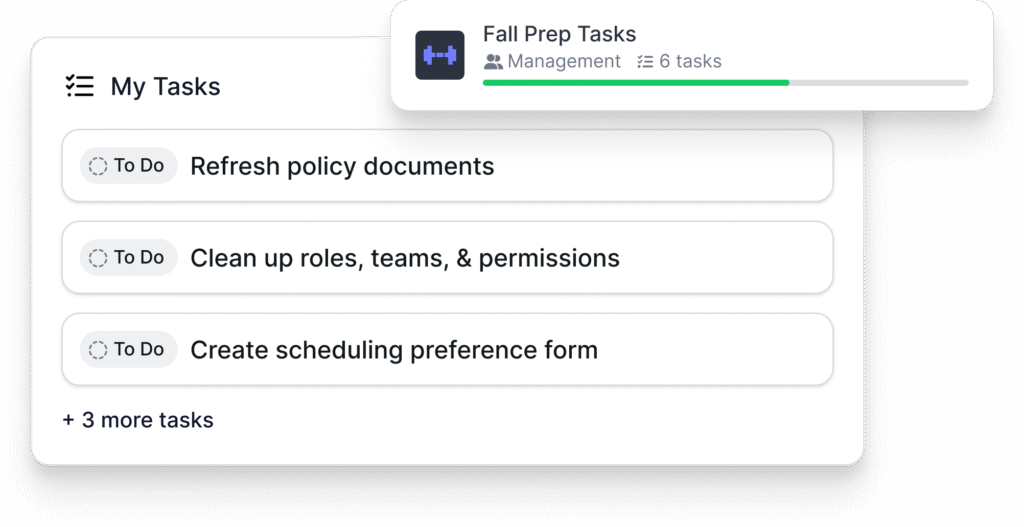
Day one is setup, and nothing goes out to your team yet. Start by reopening the fall prep project you built in NetGym’s Task Management back in step one. Draft out every task this step will take and assign each a clear owner and due date, even if that owner is you every time. You can keep adding as you work through this article, but here’s what to put on the list first:
- Clean up roles and permissions in NetGym. Make sure anyone who’s left was deactivated in your member management system, which deactivates them in NetGym too. Then confirm your newer hires have the right roles, permissions, and skills set, and that everyone’s access and location settings are current, so the requests you’re about to send reach the right people. It’s the unglamorous first move that saves you a dozen “I never got it” messages later and sets you up for an efficient fall.
- Decide how you’re collecting availability and preferences. Maybe availability comes straight through NetGym’s availability feature, while a separate form gathers preferences and professional development goals (more on that later). Nail down who builds it, what you’re asking, and how responses come back.
- Assign who stays on top of collecting responses. Collection stalls when nobody owns the follow-up.
- Refresh and re-confirm your evergreen policies. More on that next.
Before All Else: Refresh the Ground Rules
Still day one and the move most leaders skip: refresh and restate the rules of the road before you ask anyone for anything. Now is the perfect time to realign on the foundational policies that govern your team’s logistics, so everyone starts fall on the same page.
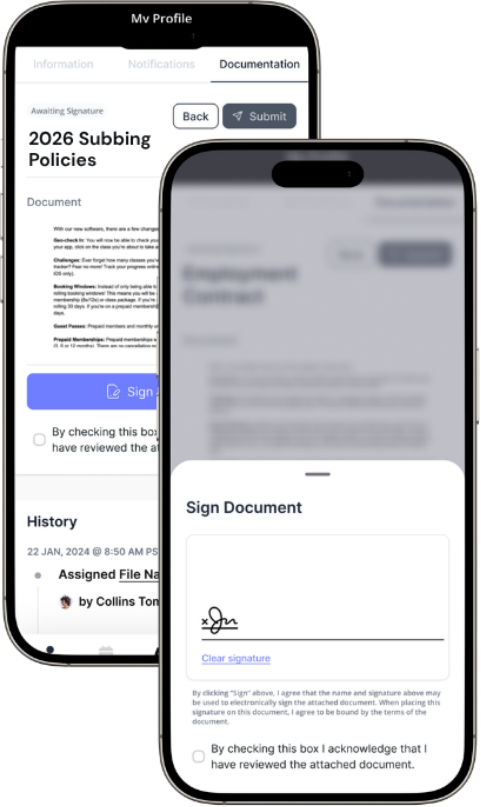
Pull up your sub policy, your scheduling rules, and your availability expectations. How sub requests get submitted, how much notice is required, what happens in an emergency, how availability changes get communicated. Update anything that has shifted, or anything you think will work better heading into fall, then have your whole team re-sign. Even if nothing changed, a restatement of understanding never hurts.
Doing this now puts everyone back in a scheduling headspace, it makes the availability you’re about to collect feel real rather than a wish list in the sky, and it means that when you build the schedule next week, the expectations that come with it are already clear.
💡Pro Tip:
Use E-Signatures on NetGym Documents to have your team re-sign the refreshed policies before they get to submit their availability and preferences. Then the sequence is clear: here are the rules, confirm you’re good with them, now tell us when you can work and what you want to teach. Send these out by the end of day one so signatures land overnight and the availability and preference requests can start going out on day two.
Not using NetGym yet? Book a demo here.
Now Ask: Availability and Preferences in One Shot
Day two, the asking begins. September resets everyone’s calendar. School’s back, students are back on campus, second jobs and side gigs shift, and the availability your team had in July is not the availability they’ll have in October. So before you assume anyone’s schedule, ask.
Open a fall availability request window with a deadline, the same way you set a close date for your client survey. Keep it tight, a week out or less. An open-ended window guarantees a slow trickle; a short one with a clear finish line gets your team moving while there’s still time to build. Maybe even state that early, complete responses get first priority.
But don’t stop at availability: ask for preferences in the same breath and make the difference clear. Availability tells you when someone can work. Preferences tell you what they’d love to teach or work, the 6am they’ve been wanting to pick up, the format they’re itching to add, the busy weekend shift they want to test themselves with. That’s the intel that builds a schedule that doesn’t just work for your team but keeps them excited, and gives them something to grow toward.
The Bonus You Don't Want to Skip: Find the Growth Opportunities
Summer scheduling was about protecting the basics and finding consistency in an inconsistent stretch. Fall gives you room to do more than keep the schedule steady; it’s your window to grow your subbing bench and develop your people. So the same form you’re using for scheduling preferences is the perfect place to ask a bigger question: what does your team want to learn and get better at this year?
Ask it directly. Who wants to learn to teach a new format? Who wants to sharpen a skill off the floor, like social media, event planning, sales or retail? Who’s eyeing a lead or management track? You’ll surface ambitions you had no idea were there, and every one of them is a way to grow what your business can offer this fall and beyond, while deepening your subbing bench and your front desk coverage options.
💡Pro Tip:
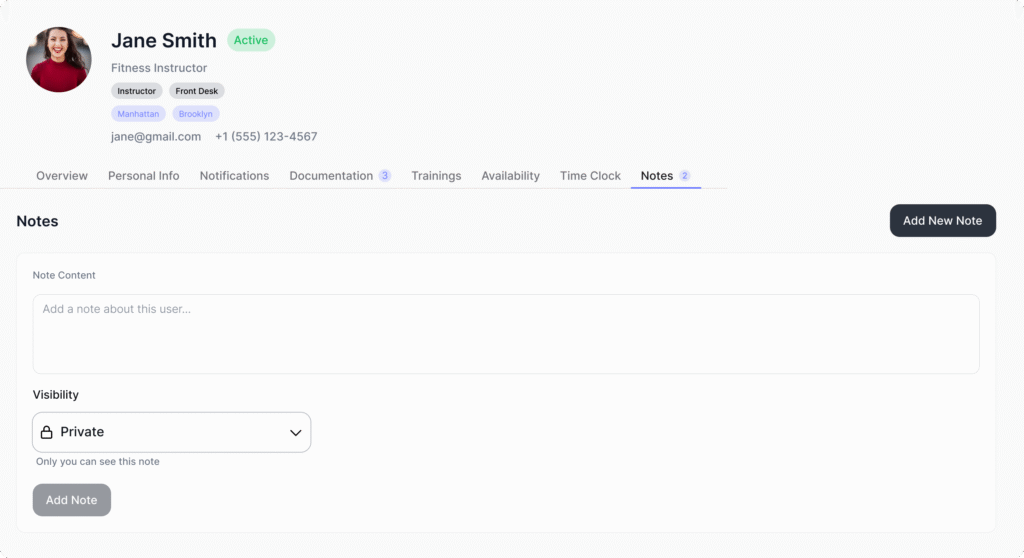
Keep a simple running list of who wants to learn what. Even the asks you can’t act on this fall become your development roadmap for the year, and just being asked tells your team you’re invested in where they’re headed. Anddd… a place to store this in NetGym just may be coming soon.
⏩ Look Ahead:
We’ll come back to this in the next article, but when you’re deciding who’s ready for more right now, don’t just go off their word and your guess. Your NetGym insights give you an actual record of who’s shown up when it matters and who’s been steady all year. Use it to spot the people who’ve earned a bigger role and are ready to grow into it.
Not using NetGym yet? Book a demo here.
Once your policy confirmations, availability request, and preference and growth forms are out, it’s just a matter of staying on top of gathering responses until the deadline. Plan a midweek reminder and a final nudge 24 hours before the close, both through NetGym. By the end of the week, close the window, announce that fall scheduling is officially in motion, and you’re ready to build.
What You Unlocked
Once your team’s availability, preferences, and ambitions are in, you’re holding both sides of the schedule for the first time. You know what your clients want from step one, and now you know what your team can give and where they want to grow. Step three is where they meet, and where the real judgment will come in.
For now, the job is this. Set up your plan of action, restate the rules, and find out what your team can give and what they want to grow into. Build the schedule with your team, and they’ll actually want to show up for it.
Want to Build A Fall Schedule The Keeps Your Team Engaged?
See how NetGym keeps roles, policies, availability, and preferences organized in one place, so you head into fall with a team that’s bought in and a schedule shaped by what they can actually give.